Night vision technology has become essential for military, law enforcement, security, hunting, and maritime applications. At the heart of every analog night vision device lies the image intensifier tube, a sophisticated electro-optical component capable of amplifying extremely low levels of ambient light.
MHNV® explain how image intensifier tubes work, their key internal components, and an often misunderstood topic in the industry: why bare tubes can sometimes cost more than complete image intensifier tubes.
The Basic Principle of Image Intensification
An image intensifier tube converts weak incoming photons into a brighter visible image through several stages of amplification.
The process can be simplified into four steps:
1. Light enters the tube
2. The photocathode converts photons into electrons
3. The microchannel plate (MCP) multiplies the electrons
4. The phosphor screen converts electrons back into visible light
This process occurs within a high-vacuum environment and takes place almost instantaneously.
Key Components Inside an Image Intensifier Tube
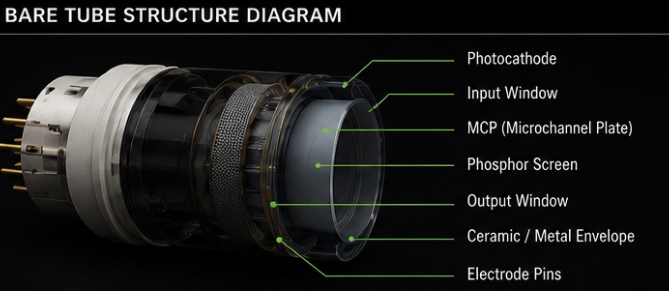
1. Photocathode: The photocathode is responsible for converting incoming light into electrons. Its sensitivity largely determines the tube's ability to perform under extremely low-light conditions.
2. Microchannel Plate (MCP): The MCP contains millions of microscopic channels. As electrons pass through these channels, they collide with the channel walls and generate additional electrons, resulting in significant signal amplification.
The MCP is one of the most critical and technically demanding components within an image intensifier tube.
3. Phosphor Screen: The amplified electron cloud strikes the phosphor screen, producing the visible image seen by the user.
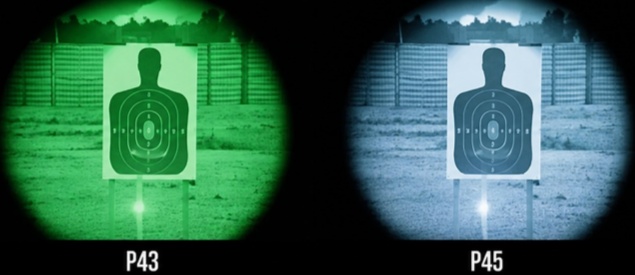
4. Common phosphor colors include:Green phosphor, White phosphor. Each option offers different viewing characteristics and user preferences.
5. Fiber Optics and Housing: Fiber optic elements transmit and optimize the image while maintaining optical alignment throughout the system.
Why Manufacturing an Image Intensifier Tube Is Challenging?
Producing an image intensifier tube requires a series of highly specialized processes, including:
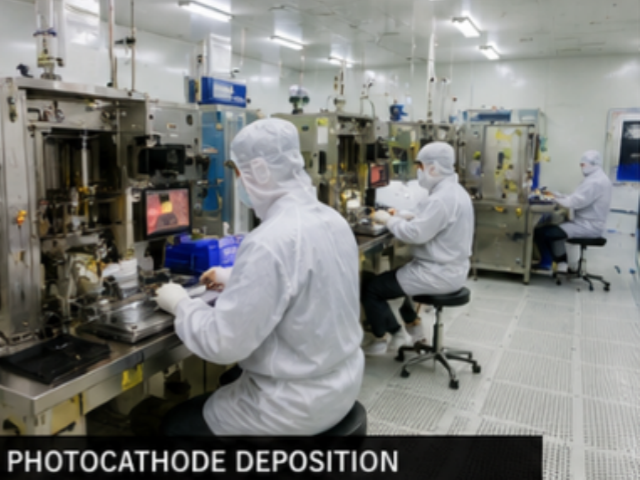
Photocathode deposition
MCP integration
High-vacuum sealing
Photocathode activation
Performance testing
Environmental screening
Many of these processes require specialized vacuum equipment and strict contamination control.
Even microscopic defects can impact final tube performance.
Why Can Bare Tubes Cost More Than Complete Tubes?
One common misconception in the night vision industry is that purchasing a bare tube should always be less expensive than buying a complete image intensifier tube.
In reality, this is not always the case. The Most Expensive Processes Are Already Completed, before a tube becomes a bare tube, the most technically demanding manufacturing steps have already been performed, including:
High-vacuum sealing
Photocathode activation
MCP integration
Internal alignment
Functional testing
These processes account for a substantial portion of the overall production cost.
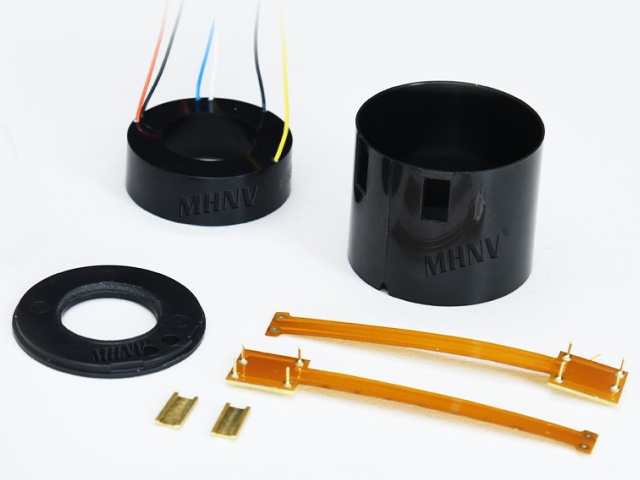
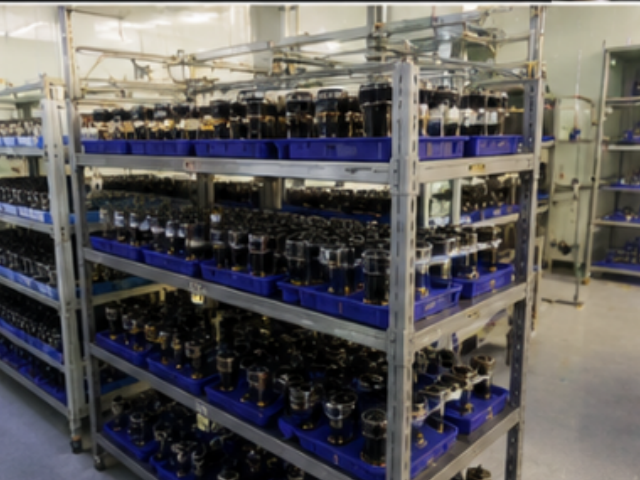
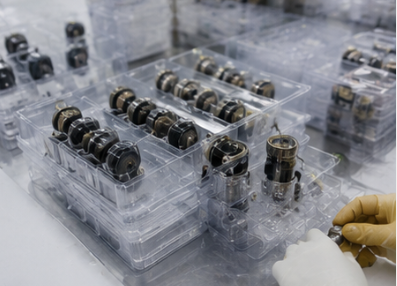
Bare Tubes Are Not Simply "Parts", abare tube is often misunderstood as a collection of components.
In reality, it is already a fully functional electro-optical assembly containing:
Photocathode
MCP
Phosphor screen
Vacuum package
The tube can operate independently once integrated into a compatible housing system.
Lower Production Volumes
Complete image intensifier tubes are generally produced in higher quantities for mainstream night vision devices.
Bare tubes, however, are often purchased for:
Research projects
Specialized integrations
OEM developments
Defense applications
https://www.mh-tech-corp.com/67/447.html
Lower production volumes can result in higher unit costs, low yield is also important parts.
Higher Technical Requirements
Customers purchasing bare tubes frequently require:
Customized interfacesand special packing requirements will increase production complexity and cost.
When comparing pricing, it is important to understand that a bare tube is not equivalent to an unfinished product.
In many cases, it already contains the most valuable technologies and manufacturing processes within the entire night vision system.
Therefore, pricing should be evaluated based on manufacturing complexity and technical content rather than physical appearance alone.
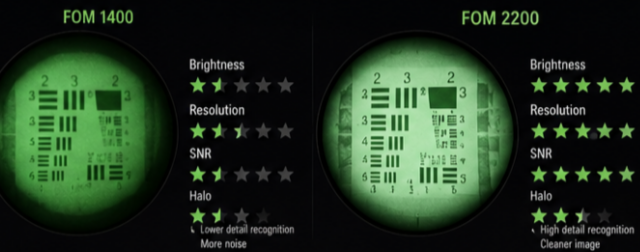
MHNV®are glad to provide different solutions, such as full image intensifier tubes: Gen2+ and Gen3, MX10160, MX11769, MX10130, optional auto-gating and manual gain, P43 green and P45 white phosphorus, different FOM1400/1600/1800/2000/2200+.
Whether you require complete image intensifier tubes, individual components, OEM integration support, or fully customized solutions, MHNV® is committed to providing the solution that best meets your requirements.
Whatever your project demands, MHNV can provide the optimal solution for you.