As night vision technology continues to evolve, image quality is no longer determined solely by the image intensifier tube. The phosphor screen, which converts electron signals into visible images, plays a critical role in overall viewing performance and user experience.
Among the most widely used phosphors in modern night vision devices, P43 and P45 have become the preferred options for military, law enforcement, security, and professional observation applications. While both offer excellent low-light imaging capabilities, their physical characteristics and visual performance differ in ways that can significantly influence operational effectiveness.
This article provides a concise comparison of P43 and P45 phosphors, highlighting their strengths, limitations, and ideal platform applications.
What Are P43 and P45 Phosphors?
The phosphor screen is the final stage inside an image intensifier tube. After incoming photons are amplified through the microchannel plate (MCP), the phosphor layer converts the amplified electron stream into a visible image.
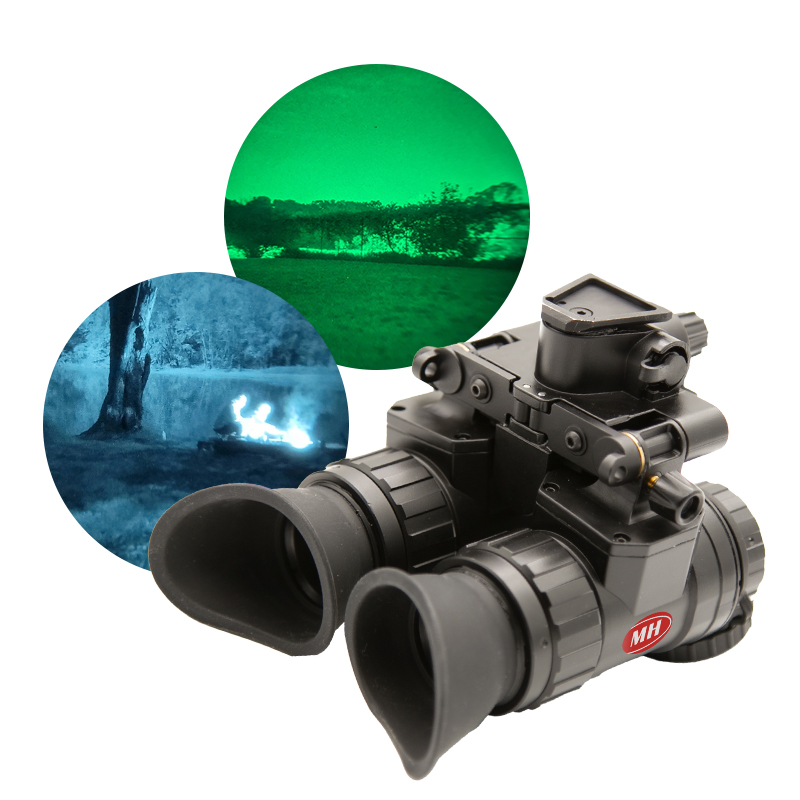
P43 phosphor produces the traditional green image commonly associated with military night vision systems.
P45 phosphor produces a white or bluish-white image, often referred to as White Phosphor (WP) technology.
Both phosphors are designed to deliver high-performance night vision imagery, but they differ in color output, persistence characteristics, and user perception.
Physical Characteristics Comparison
The human eye is naturally sensitive to green wavelengths, which explains the long-standing popularity of P43 phosphor in military applications. However, advancements in white phosphor technology have improved image interpretation and visual comfort for many users.
Night Vision Performance Comparison
P43: Proven Reliability in Operational Environments
P43 phosphor has been the industry standard for decades.Its green image output provides excellent target recognition and remains highly effective in low-light and no-light conditions. Operators familiar with traditional night vision often prefer P43 because of its familiar appearance and proven field performance.
Key Advantages of P43
Mature and highly reliable technology
Excellent brightness efficiency
Strong image clarity in low-light environments
Cost-effective compared with white phosphor alternatives
Widely used across military and defense programs
Limitations of P43
Reduced perceived depth and contrast compared with white phosphor
Extended observation may contribute to visual fatigue for some users
Less natural image presentation
P45: Enhanced Visual Perception and User Experience
P45 phosphor generates a white image that more closely resembles natural grayscale vision.
Many operators report improved image detail recognition, better contrast discrimination, and reduced eye strain during prolonged missions.
Key Advantages of P45
More natural image appearance
Improved perceived contrast and detail recognition
Reduced operator fatigue during extended observation
Better object differentiation in complex environments
Increasingly preferred for professional surveillance and tactical operations
Limitations of P45
Typically higher acquisition cost
Performance benefits can vary depending on tube quality and environmental conditions
Some users accustomed to green phosphor may require a short adaptation period
Which Phosphor Performs Better?
There is no universal winner.
Performance depends on mission requirements, user preference, and system configuration.
Choose P43 When:
Budget efficiency is a priority
Existing fleets use traditional green phosphor systems
Long-term proven reliability is required
Standard military night vision applications are involved
Choose P45 When:
Maximum situational awareness is desired
Operators conduct long observation missions
Enhanced image interpretation is critical
Premium tactical or surveillance systems are being deployed
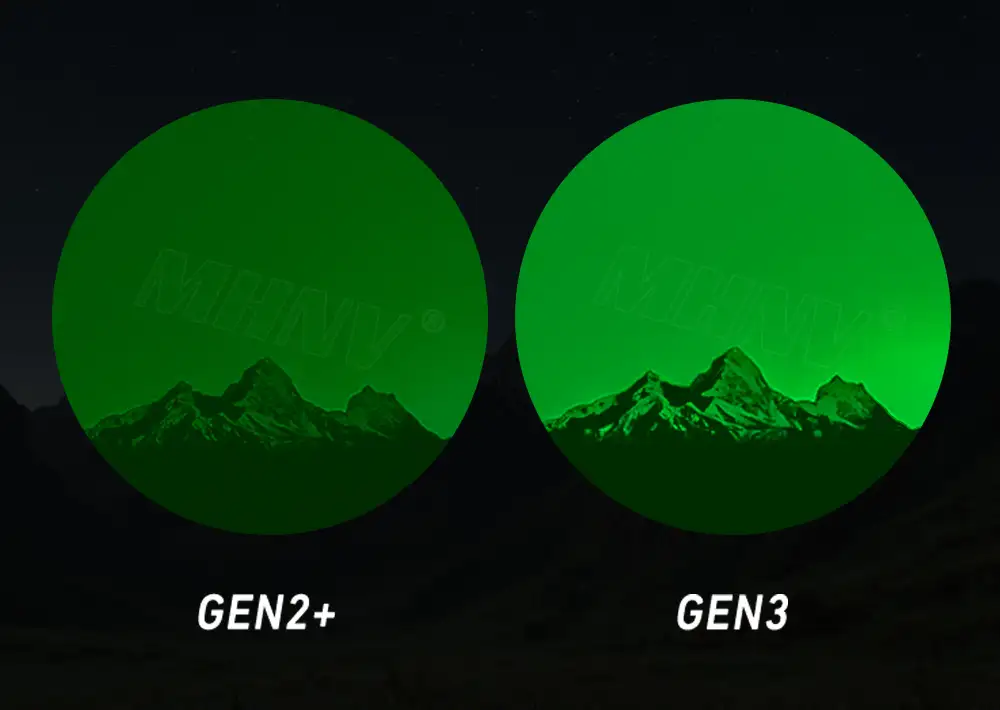
The P43 and P45 image intensifier tubes are available in Gen II, Gen II+ and Gen III variants. Distinct differences exist in the core structure, photoelectric response parameters and gain characteristics of devices across generations, which lead to obvious discrepancies in imaging output, signal-to-noise ratio, color reproduction and low-light detection performance. Detailed hardware specifications and imaging effect comparisons for each model are provided in the attached reference materials below.
Optimal Phosphor Matching for Classic NVG Platforms
All PVS-7, PVS-14, PVS-31 and GPNVG-18 NVGs support plug-and-play P43/P45 IIT replacement, with mission scenarios determining the best configuration:
AN/PVS-7: Default P43 for mass infantry rural/jungle patrols; P45 is a minor upgrade for fixed overnight surveillance.
AN/PVS-14: P43 for short-term field patrol and budget deployment; P45 for urban law enforcement and multi-hour dismounted reconnaissance.
AN/PVS-31: Military standard dual P45 setup for special operations, CQB and airborne missions; P43 is only a low-cost export alternative.
GPNVG-18: Premium quad P45 configuration for aviation and long-range panoramic surveillance; P43 versions are limited to civilian demo units due to severe visual fatigue.
Your Trusted Specialist for Night Vision Image Tubes!
Backed by our professional optical engineering team specializing in Gen II, Gen II+ and Gen III image intensifier tubes, we master full-cycle R&D, testing and customization covering P43 green phosphor and P45 white phosphor solutions. We boast complete in-house production lines, strict optical performance calibration and mature parameter tuning for FOM, resolution and SNR, fully capable of tailoring tube configurations to match your low-light surveillance, tactical observation and hunting application demands.
Driven by relentless pursuit of optical precision, consistent product stability and all-round customer support, Xi'an MHNV® Co.,Ltd keeps optimizing P43 & P45 tube craftsmanship and performance benchmarks. Our image intensifier tubes deliver far more than basic night vision clarity—they guarantee clean noise control, distinct detail reproduction and reliable long-term service in extreme dim light scenarios. Whether you seek standard-spec P43/P45 tubes, high-FOM Gen III premium variants or fully customized optical matching solutions, our experienced technical team stands ready to offer one-stop professional consultation and flexible OEM cooperation.
We sincerely welcome global buyers, engineering partners and distributors to reach out, discuss project demands and build long-term win-win partnerships with Xi'an MHNV® Co.,Ltd !